Misc

Stuff that doesn’t quite fit anywhere else.

  • One is a Wise Crowd

    I have written about The Wisdom of Crowds before many times (see here, and here, and here…). In short, given a problem with a fully objective, quantifiable answer, taking the average of many, diverse people’s estimates will give a more accurate answer than the estimate of an expert.

    Now there’s a new study that shows that you can provide multiple estimates yourself, by putting yourself in a different frame of mind — then average them. And that average is likely to be more accurate than either of your two guesses, though not as accurate as involving another person. Neat mind hack!

    …participants were given detailed directions for making their follow-up guess: “First, assume that your first estimate is off the mark. Second, think about a few reasons why that could be. Which assumptions and considerations could have been wrong? Third, what do these new considerations imply?… Fourth, based on this new perspective, make a second, alternative estimate.” When the participants used the more involved method, the average was significantly more accurate than the first estimate. The “crowd within” achieved about half the accuracy gains that would have been achieved by averaging with a second person.

  • The perfect geek age?

    Was being born in 1971 the perfect time to be born a geek?

    • It meant I got to see Star Wars in the theater, 13 times, at ages 6 and 7, exactly when it would overwhelm my sense of wonder.
    • I got an 8-bit computer at exactly the age when boys get obsessive about details, and I spent days PEEKing and POKEing and typing in listings from magazines and learning how computers actually worked.
    • It meant at least half the new games I played were actually new ideas.
    • And yet I got to play real pinball machines.
    • In real arcades.
    • New Wave science fiction was the used paperbacks laying around, and I got to read cyberpunk and steampunk as they were invented, and see SF when fandom was not yet a media circus.
    • I got to play D&D from as close to the beginning as most anyone.
    • And feel like I had inside baseball knowledge during the D&D scene in E.T., which the other folks in the theater didn’t get.
    • I was there for when the X-Men were new and fresh
    • I got to high school when PCs were becoming ubiquitous.
    • I got to college when Macs were on Apple campuses, and actually useful.
    • And when you had no choice but to use libraries for research, so I actually learned what real research is.
    • And I was too young to feel cynical about Dead Poets Society.
    • I got onto the Internet after it was tiny, but before it was mass market. So I got to see and use most of the tools and software that were key to its evolution, as they were used, then replaced, then discarded. Pine, gopher, Usenet, Mozilla…
    • I read Sandman when the issues first came out.
    • I got into the games business before it was mass media, but got to ride the wave.
    • …and also got to see the Web unfold…
    • …and got Wikipedia and Google just in time for when I didn’t need to use libraries anymore…
    • …and see some of the science fiction coming true.

    Looking back on it, it makes me feel a bit sorry for those born ten years later. And I can’t judge ten years earlier, but so much of that seemed to hit at the right age. Looking back at history, it seems like the last big waves of popular invention like this were decades ago. Teens with hot rods? Engineering in the 20s? I see my kids now, and they are so clearly getting the finished products of so much, not the products in the process of invention… Am I wrong?

  • Blerp & Minsh: layering the web

    Blerp, a new property of the RocketOn folks, is a new social network with a twist. RocketOn, like Weblin, is a plugin that lets you layer stuff on top of the web. It was for avatars and MMOs, but now it’s been repurposed as a way to annotate the web. You get a frame around your browser that lets you drop text, pictures, and so on on various webpages. People you are linked to get to see the annotations, and you can slurp your networks from Facebook, twitter, etc. Blerp’s just opened its alpha, so check it out here.

    Minsh is a little different; it adds a virtual worldish layer to Twitter by representing the people you follow as fish. They use little chat bubbles to tweet, and you can click directly on them to reply. I suspect that using this tool will drive users further towards synchronous use of Twitter… It’s in closed alpha, but here’s a video:

  • Meep cupcakes

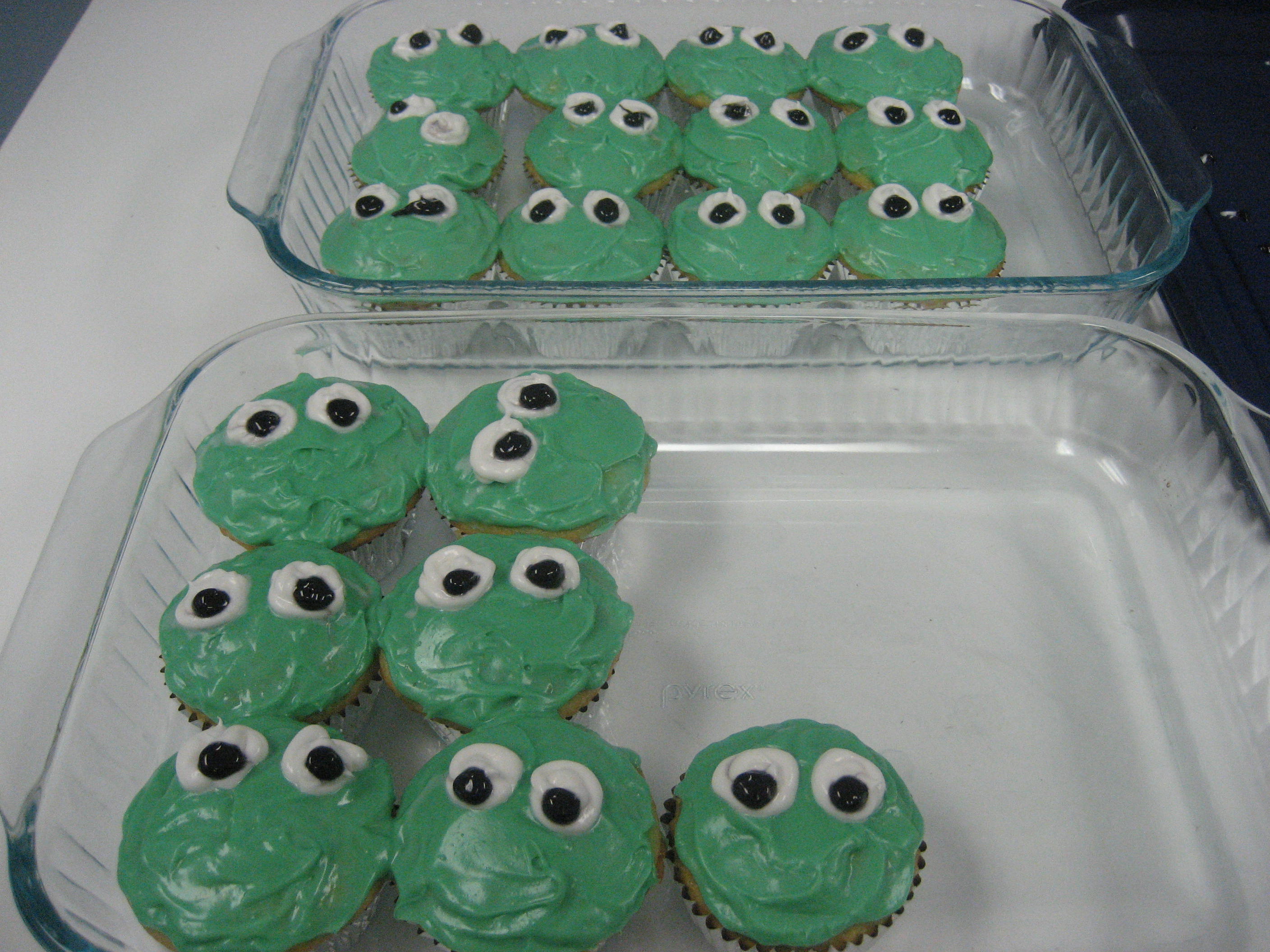
    meep-cupcakes-001meep-cupcakes-002These appeared at the office today.

    Meeps have continued to develop as a mascot for Metaplace. In Metaplace Central, you can now go to a meep vending machine to buy them. They shoot out and land in the water to be eaten by sharks. Yesterday a user published a meep cannon on the marketplace. It fires them off at a high rate and they make a satisfying, gooey splat when they land. We now give out plush meeps to top performers every week. And they eat cupcakes too.

    And this one on the right is the one that I ate. You can tell by the nervous look on its face.

  • Bits for free, bits for sale

    Boy, am I neglecting blogging lately. Even my Twitter has gone mostly silent.

    There have been several stories that caught my eye. For example, this one about musicians making decent gig money in Second Life was interesting, in part because some of what a virtual environment provides is an easier way to do marketing. As I have said before, I think the future of a lot of the arts is around personal relationships with their fans because of the way the landscape is shifting around information and money, and there’s something about virtual worlds that helps build fandoms.

    Speaking of personal relationships, while at the IGF and GDC awards, I was struck by the clear signs of “celebrity” that some of the event had. Some of this was due, no doubt, to the fact that Tim Schafer’s performance as emcee was funnier and more entertaining than that of the emcees for any televised awards show. Some of it, though, was the evident fact that the creators of indie games are getting known as names, in large part because they produce quirky and individualistic games at a rapid rate. Which brings me to mention The Croopier, just because it’s a neat project.

    Which reminds me that there’s a new documentary premiering on journalism in virtual worlds — talk about a profession that is in upheaval thanks to changes in business models and the value of information! I’m halfway through a galley copy of Cory Doctorow’s upcoming novel, in which a journalist figures pretty prominently… and struck by how prescient Bruce Sterling was when he said “information wants to be worthless.”

    Which leads me to idly speculate… if anything that can be digitized will be, and anything that is digitized becomes worthless, then what will eventually remain both undigitizable and therefore monetizable?